
How to Improve Your Gut Health

Your gut influences your immune system, your brain, your skin, and your weight. Here is what the research actually says about improving it, and where to start.
What Is Gut Health, Really?
The phrase "gut health" gets thrown around a lot, so let's ground it in biology. Your gastrointestinal tract is home to roughly 38 trillion microorganisms, about as many cells as make up your entire body.1 This ecosystem, collectively called the gut microbiome, includes bacteria, fungi, viruses, and other microorganisms that do far more than just help you digest food.
A healthy gut microbiome is diverse. It contains many different species working in balance, producing short-chain fatty acids (SCFAs), synthesizing vitamins, training your immune system, and maintaining the integrity of your intestinal lining. When that balance tips, through poor diet, antibiotic use, chronic stress, or other factors, the downstream effects reach well beyond your stomach.
The concept of "good" versus "bad" gut health is really about the diversity and balance of this internal ecosystem, the integrity of your intestinal lining, and whether the whole system is producing the metabolites your body depends on. When researchers talk about gut health, they are measuring things like microbial diversity, SCFA production, intestinal permeability, and inflammatory markers.
7 Signs Your Gut Needs Attention
Your body sends signals when the gut microbiome is out of balance. Some are obvious. Others are surprising. Here are seven research-backed signs that your gut may need support, and where to go deeper on each one.
Frequent Gas, Bloating, or Digestive Discomfort
Occasional gas is normal. But persistent bloating after meals, excessive gas, or a feeling of heaviness may indicate microbial imbalance or difficulty breaking down certain foods.*
Irregular Bowel Habits
Constipation, loose stools, or alternating between the two can reflect changes in microbial composition and SCFA production, which influence motility and water absorption in the colon.*
Brain Fog or Low Mood
The gut-brain axis is a bidirectional communication highway.7 Dysbiosis and increased intestinal permeability have been linked to neuroinflammation and changes in neurotransmitter production, including serotonin and GABA.*
Skin Issues
The gut-skin axis connects intestinal dysbiosis to skin conditions. Research suggests disruptions in gut bacteria may contribute to systemic inflammation that shows up on the skin.
Poor Sleep
Your gut produces the precursors to melatonin. Research shows the microbiome influences circadian rhythms, and disrupted sleep can in turn alter gut bacteria, creating a cycle.*
Persistent Fatigue
The gut microbiome plays a role in nutrient absorption, B vitamin synthesis, and systemic inflammation. When any of these are compromised, energy levels often suffer.*
Increasing Food Sensitivities
When the intestinal lining becomes more permeable (sometimes called "leaky gut"), partially digested food particles can cross into the bloodstream, potentially triggering immune responses to foods that were previously tolerated.*
When to See a Doctor
These signs are common and often respond to dietary and lifestyle changes. However, persistent or severe digestive symptoms, unexplained weight loss, blood in stool, or symptoms that significantly affect your quality of life should be evaluated by a healthcare provider. Supplements support health but do not replace medical care.
The Gut-Body Connection: Why Your Gut Affects Everything
The reason gut health shows up as skin problems, brain fog, low immunity, or weight changes is that your gut is connected to nearly every system in your body. Here are four pathways the research has identified.
Immune System
Approximately 70% of your immune cells reside in gut-associated lymphoid tissue (GALT).2 Your microbiome continuously trains and calibrates this immune tissue, influencing how your body responds to pathogens, allergens, and inflammation.*
Brain and Mood
The gut-brain axis operates through the vagus nerve, neurotransmitter production, and immune signaling.7 Your gut bacteria produce over 90% of the body's serotonin and are involved in GABA synthesis, both of which directly influence mood, sleep, and cognition.*
Skin Health
The gut-brain-skin axis was first proposed over 80 years ago and is now supported by research linking intestinal dysbiosis to inflammatory skin conditions.11 Oral probiotics have been shown to modulate systemic inflammation and oxidative stress with visible effects on skin.*
Weight and Metabolism
The gut microbiome influences energy harvest, fat storage, and appetite-regulating hormones including GLP-1.* Studies show that obese and lean individuals have measurably different microbiome compositions.
How to Improve Your Gut Health
The good news: your gut microbiome is remarkably responsive. Research shows dietary changes can shift microbial composition within a single day. Here are the four pillars of gut health improvement, organized by what the science supports.
1. Feed Your Microbiome: Fiber and Fermented Foods
Your gut bacteria ferment dietary fiber into short-chain fatty acids (SCFAs) like butyrate, propionate, and acetate. These SCFAs fuel the cells lining your colon, support gut barrier integrity, regulate inflammation, and even influence appetite hormones.* When your diet lacks fiber, SCFA production drops and the microbiome loses diversity.
A systematic review of 44 studies found that dietary fibers, particularly inulin and other prebiotic fibers, increase the abundance of beneficial Bifidobacterium and Lactobacillus species and boost butyrate production.
A landmark Stanford study compared high-fermented-food diets to high-fiber diets over 17 weeks. The fermented food group saw increased microbiome diversity and decreased markers of inflammation. The fiber group saw increased SCFA production and more consistent microbial stability. The takeaway: both matter.
2. Support with Probiotics: Strain Diversity Matters
Probiotic supplementation has strong evidence behind it. A 2025 umbrella meta-analysis covering multiple systematic reviews found that probiotic supplementation significantly reduced the risk of diarrhea, nausea, and digestive discomfort across multiple study populations.
A separate meta-analysis of 26 randomized controlled trials (n=1,891) demonstrated that probiotics significantly improved markers of gut barrier function, including reduced zonulin and endotoxin levels, both indicators of intestinal permeability.*
When choosing a probiotic, diversity is a key factor. A review examining 12 comparative studies found that multi-strain probiotic mixtures were more effective than single-strain formulations in 75% of cases, spanning digestive health, immune function, and respiratory outcomes.* This makes sense biologically: a diverse probiotic mirrors the natural diversity of a healthy gut.
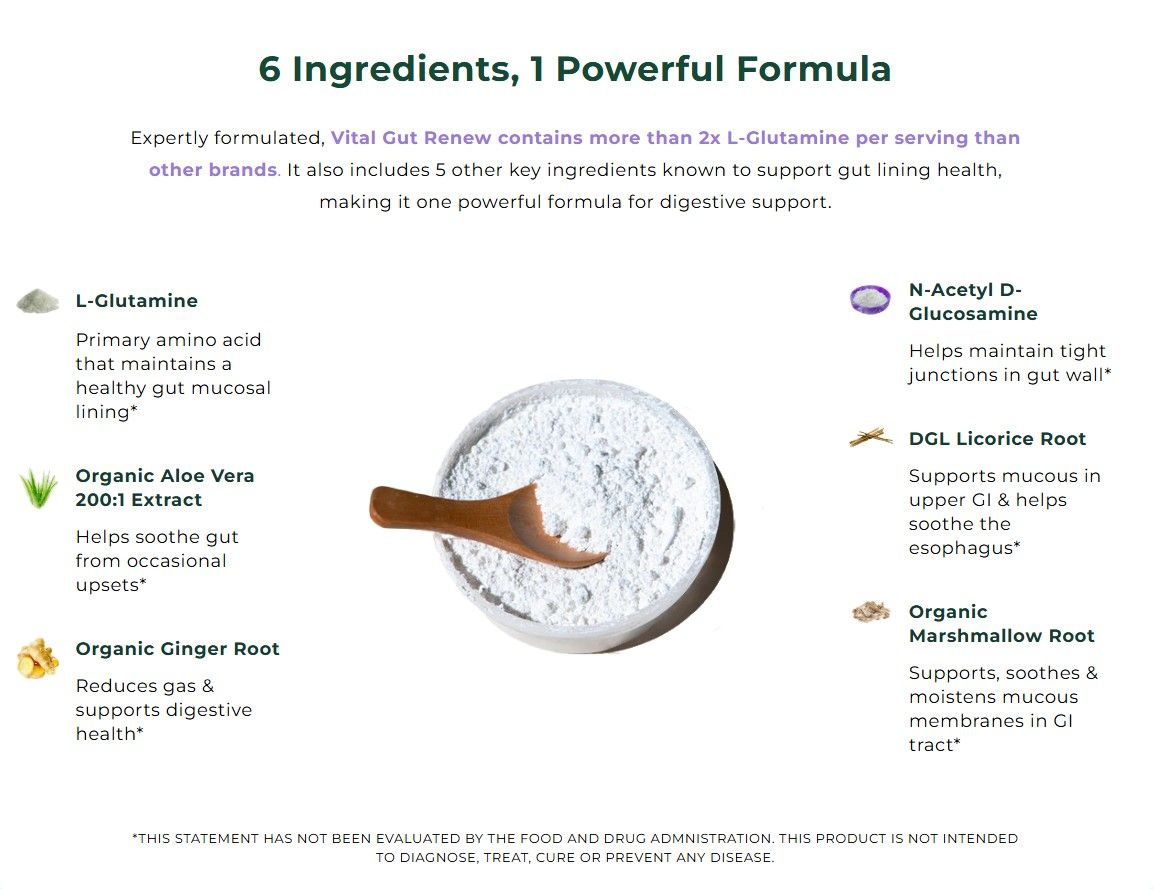
3. Repair the Lining: L-Glutamine and Gut Barrier Support
Your intestinal lining is a single cell layer thick. It has to simultaneously absorb nutrients and keep everything else out. When this barrier is compromised, partially digested food particles, bacteria, and toxins can cross into the bloodstream, triggering immune responses and systemic inflammation.*
L-Glutamine is the primary fuel source for the cells lining the small intestine (enterocytes). A 2024 systematic review and meta-analysis of clinical trials found that glutamine supplementation significantly reduced markers of intestinal permeability, promoting the expression of tight junction proteins like occludin and claudins that hold the gut lining together.*
If you are experiencing signs that suggest gut lining concerns, like food sensitivities, skin reactions, or digestive discomfort, gut barrier support may be an important piece of the puzzle.
4. Consider a Periodic Reset
Sometimes the microbiome needs more than maintenance. Periodic cleansing supports the body's natural detoxification processes and can create a cleaner foundation for beneficial bacteria to recolonize.* This is especially relevant if you have a history of processed food consumption, antibiotic use, or environmental toxin exposure.
The approach is sequential: cleanse first to support a healthy intestinal environment, then replenish with a high-diversity probiotic, and maintain with daily fiber.* Think of it like preparing soil before planting a garden.
The approach is sequential: cleanse first to support a healthy intestinal environment, then replenish with a high-diversity probiotic, and maintain with daily fiber.* Think of it like preparing soil before planting a garden.
*These statements have not been evaluated by the Food and Drug Administration. This product is not intended to diagnose, treat, cure, or prevent any disease. Consult your healthcare provider before starting any supplement regimen.